
| ||||||
|



5-Day Sketching Workshop
Work on location with Laure at Jekyll Island, see live demos on sketching birds, dolphins, beach treasures, native flora, fauna, the inescapable beach kitsch and more! You’ll receive a full color handout with step-by-step instructions on many of these subjects PLUS one-on-one feedback and help on your work.
The workshop will start each day at 9:30 a.m. and finish up in the late afternoon, leaving you with plenty of time to strike out on your own for a little exploring, relaxing, shopping or whatever your heart desires!
Jekyll Island
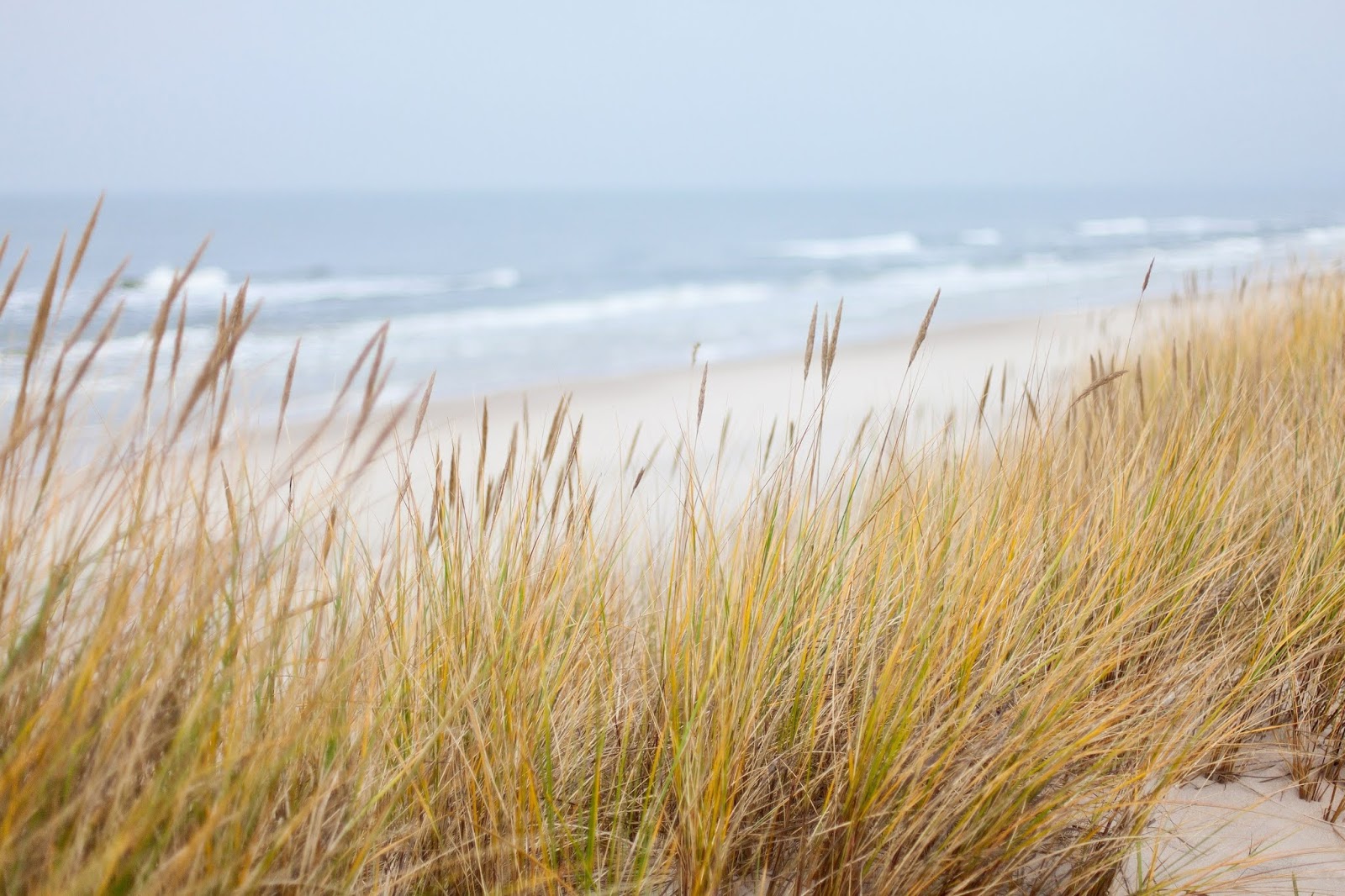
One of the four barrier islands along the coast of Georgia known as the Golden Isles, Jekyll Island has a long but quiet history. Guale and Muskogian Indian tribes once made their home on the island before it was discovered by Europeans in 1510. Eventually, the English gained occupation. The island was home to a number of plantations.
In the late 1800’s, a plan was created to turn the island into a winter playground for the wealthy. Members joined the Jekyll Island Club of one hundred patrons and began building “cottages.” These mansion-sized residences were the homes of the Rockefeller, Vanderbilt, Morgan, and Pulitzer families. They played and vacationed on the island up until World War II.
After the war, the island was eventually bought by the state and the Jekyll Island Resort Club was opened in 1985 as a luxury resort hotel.
For more information on Jekyll Island, please click here. For more information on the club, please click here.

Our Visit
Each day will have us exploring the island with time in the historic district, visiting the beaches, spending time with some turtles, enjoying the Mosaic Museum and nearby areas.
We will be capturing these visits and more in our sketchbooks so we can enjoy them long after we leave the island.

Activities Galore!
Whether you’re into kayaking, hiking, walking, birdwatching, or simply soaking up the warmth of the sun, there’s plenty to do on the island and in the nearby areas of St. Simons and Brunswick!
Want To Join The Fun?!
Please click here to learn all the details and to download the Registration Form! As always, I hope you can join me as it's going to be soooo much fun! Please let me know if I can answer any questions.

Registration is now open for Painted Travels: LVC Workshop with EARLY BIRD PRICING still in effect until Thursday, February 28, 2019!

Come and join me for a truly magical 10-day art journaling workshop in Frayssinet, France, September 19 - 29, 2019! We’ll be staying at Le Vieux Couvent, a refurbished 17th-century convent-turned-art retreat. Located in the small village of Frayssinet, it is centrally located to many awesome sketching destinations in the Lot and Dordogne Regions of southwest France.
The property features full en-suite bedrooms, and you've be served delightful, scrumptious meals with locally-sourced ingredients. There is a large, open classroom open to you 24 hours a day as well as a large art library.
The workshop will focus on learning to keep a travel journal filled with the sights and experiences that speak to you as you visit many different locations in the area, designing simple and effective page layouts filled with watercolor sketches, journaling and hand-lettering. I’ll be there to help you create pages you’ll treasure for years to come with techniques and tips as well as painting demonstrations.

Imagine relaxing in the gardens by the koi pond with time for sketching, reading and relaxing or exploring medieval towns, castles, and small villages followed by a picnic lunches and small cafés. This workshop offers a laid-back, no pressure approach to travel journaling. The venue itself invites you to s-l-o-w down and savor the French countryside with its quiet beauty.
I had the pleasure of hosting a workshop there is October 2018 and the participants didn’t want to come home and several remarked what a once-in-a-lifetime experience LVC truly is—you really don’t want to miss this!
For all the details and to get registered today, please visit https://bit.ly/2H0GX6h! If you know someone who might be interested in this workshop, please pass this along to them.
For all the details and to get registered today, please visit https://bit.ly/2H0GX6h! If you know someone who might be interested in this workshop, please pass this along to them.
I look forward to traveling with you in France!
Prepping For Paris: Choosing A Journal can be found here.
Prepping For Paris: Choosing Art Supplies can be found here.
Extra-Special Items You Might Want To Bring
Getting ready to go to Paris or anywhere really, especially when you fly, is a matter of making choices based on how much you use an item, how much use you get out of an item and how much room you have in your luggage!
For me, extra-special items usually have to meet a few requirements or they get to stay home in the studio. I generally ask 3 questions:

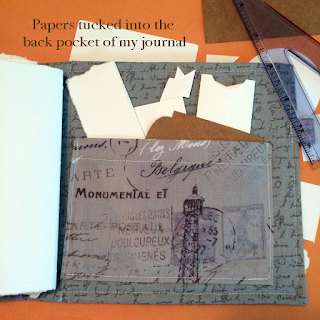 Speaking of envelopes...I like to install an envelope or pocket on the back cover or last page of my journal to contain these small pieces of paper while I'm out and about. The second purpose for the envelope is that it's a great place to tuck receipts, candy wrappers, found ephemera and business cards to be added later.
Prepping For Paris: Choosing Art Supplies can be found here.
Extra-Special Items You Might Want To Bring
Getting ready to go to Paris or anywhere really, especially when you fly, is a matter of making choices based on how much you use an item, how much use you get out of an item and how much room you have in your luggage!
For me, extra-special items usually have to meet a few requirements or they get to stay home in the studio. I generally ask 3 questions:
- Does the item or tool have more than one use?
- How much does it weigh/how much space does it take up (and can either be reduced)?
- Do I already use it in my journaling when I am close to home or at home?
The last question is to make sure I'm not giving into fear and taking things I don't normally use in my sketchbook. The following list is in no particular order of extra-special items to consider bringing along!
Washi Tape
Washi tape is both a decorative item that can be used on a page in place of art and it can also be used to tack other pieces of ephemera to the page if I don't have glue. However, who wants to drag a roll of 10 yards of one flavor of washi tape? Instead, consider rolling a small amount of tape onto a popsicle stick or tongue depressor:

Washi tape can be used to add a fun element to a journaling page that contains mostly text; it can be used on a page that is black and white to add color; tape can be used to add hard-to-draw elements like a stamp or passport indicia or because they're just plain fun! I will be taking travel and seasonal themed washi tape: stamps, indicia, maps and autumnal leaves.
 |
| I used washi on the page above to add a spark of interest |
Extra Paper
I tend to save scraps of paper from projects I create in the studio and I almost always have a variety of papers to play with in my journals. These pieces of papers can serve a number of purposes: they provide a place for me to scribble a pen to get it started, to test paint colors and to workout a few thumbnails; a piece of paper can easily cover up a mistake, a drop of ink or paint and similar "oops;" when there is contrast between the paper colors, the scrap of paper can add importance or emphasis to a sketch or as a title block.
If the paper is cut into a shape like the banner or oval shape shown below, you can trace around the outer edges to easily create a shape on the page even if you don't want to add the actual piece of paper.
If the paper is cut into a shape like the banner or oval shape shown below, you can trace around the outer edges to easily create a shape on the page even if you don't want to add the actual piece of paper.
Another fun thing to do is take along small envelopes with matching cards as well as paper cut into tags, circles, ovals and other shapes to use on your pages. Write secret messages or paint a small vignette on the interior card for your viewer to discover when they look through your travel journal. Many of these papers are a lighter weight watercolor paper so that I know I can paint on them if I so choose.
 |
| A variety of papers in different shapes can add a lot of pizzaz to your journal pages! |
 Speaking of envelopes...I like to install an envelope or pocket on the back cover or last page of my journal to contain these small pieces of paper while I'm out and about. The second purpose for the envelope is that it's a great place to tuck receipts, candy wrappers, found ephemera and business cards to be added later.
Adhesives
When we have bits and bobs of paper floating around, we need to find a way to keep them attached to the page. There is a host of adhesives on the market that will adhere just about anything to any surface. My favorite is double-sided tape while I'm traveling. You can get both permanent and non-permanent tape if you want to be able to reposition items.
I choose a tape that is acid-free and narrow in width. I can always add more than one strip if I need more adhesion. Glues take time to dry and can shift while drying, especially if the book is traveling in your bag. Liquid glues also have to be declared as part of your fluids when you go through security. Glue sticks are another option, but I personally have never had good luck with items staying stuck!
Scissors, Tracing Paper, White Sticky-Notes
If you're going to be adding ephemera to your page, it's helpful to have a small pair of scissors with you. Make sure they're less than 4 inches in length to keep from getting snagged by security. Tracing paper can come in handy for creating lettering, testing ideas before you commit, and for drawing the opposite side of a symmetrical item.
For example, if you're drawing a wine bottle. You can trace the line you've drawn for the first side of the bottle onto a piece of tracing paper. Flip the paper over and position in the correct place. Trace over the first line drawn to transfer the image to the page!
White sticky-notes are a bit hard to find, but it's worth it (to me) to hunt them down. Have you ever skipped a page in your journal so you could write your thoughts down and then forget what you wanted to write? I have! I found my solution with a sticky-note. I write my thoughts and then stick it to the page towards the center seam so it doesn't fall out.
Later, when I have time, I will transfer my notes to the page. The reason I use white is because I have found that some of the brightly colored notes can bleed if they get wet and if they're left in the journal for a long period of time, the color can transfer to the page and who wants that?!
Other Art Supplies: Mark Making Tools
Even when you plan to do most of your journaling in pencil, pen and watercolor, it can be fun to have along a few favorite markers, colored pencils, or watercolor pencils in versatile colors that coordinate with your overall theme, if you have one. Using a variety of tools can break up the monotony for the artist as well as the viewer.
With this in mind, I will be taking a few pens in sepia and graphite gray as well as a few ZIG Clean Color Real Brush markers or Faber-Castell® Artist PITT Pens with brush-tips. I will also be taking a few fountain pens filled with permanent inks because I like the quality of line work I get with a fountain pen. However, this requires taking ink through security and declaring it as part of the fluids I'm taking.
If you are traveling with a fountain pen, I highly recommend you travel with the fountain pen either completely empty or full and placed inside a closed baggie. If the pen should leak, at least it won't contaminate the rest of your kit! If you have a favorite pen or pencil, only consider taking it on a trip if it is easily and inexpensively replaced. For whatever reason, it seems we tend to lose items, drop items and misplace items when we're traveling and no one wants to lose a favorite tool that cannot replaced!
What other extra-special items would you consider worth the space, weight and hassle to bring on a travel journaling adventure?
SaveSave

A visit to the Provence region is a delight to the senses, the sun-drenched patina of the old architecture, the vibrant market fare, and the glittering coastline...but that's not all! Breathe deep and smell the scent of fresh bread, listen to the cries of the gulls and feel the warmth radiating from the cobbled stones of the street. History saturates the area and there are plenty of markets and cafes to explore and enjoy.
This new adventure begins on Thursday, May 3rd! Click here to register.
This class is structured to help you build your skills for working on location as if we were actually in Provence. Imagine stepping off the bus and being told we’ll be moving to our next destination in 30 minutes. That means you have thirty minutes to get something down on the page—once you find what you want to sketch!

The recommended time limits are strictly optional. They are in place to help you gauge your speed and to make you aware of how fast time moves on location. If you just love to draw and paint, you can always ignore the suggested timeframes and create at your own pace.
Video demos are provided for all of the assignments. All techniques are shown so that you can “see” when and where they’re used. You have total flexibility as to when you watch the videos once they are posted. The demos are available for the duration of the class and you can watch them as many times as you like.
Some “travelers” find it helpful to paint along with the video, pausing it as needed to learn the techniques being demonstrating. Others watch the video and then apply the techniques to a photo reference of their choosing.
Individual and gentle feedback is given by Laure for each piece of work posted to the private class blog. All feedback is provided in a secure environment along with encouragement from the other class “travelers.” Everyone will have email access for any questions or challenges that come up during the “visit” to Provence.
The recommended art supply list can be found here.
The recommended art supply list can be found here.
Sound like your kind of visit?! Come and join the fun by clicking here.
I hope to see you in Provence!
As you may have heard by now, I will be conducting an Art Workshop in Paris, France in October of this year (details here). Through a series of serendipitous conversations, a second workshop opportunity has come my way and I cannot wait to share it to you!
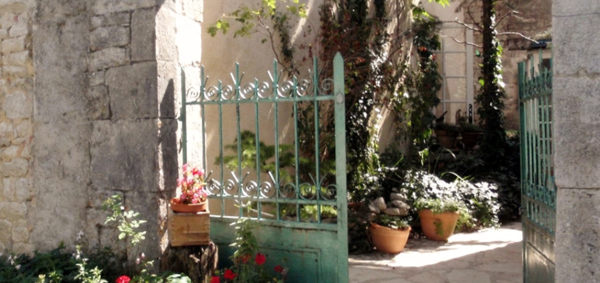
Le Vieux Couvent is a refurbished 17th century convent which is now a phenomenal art retreat located in the South of France in Frayssinet. Way south of Paris, this beautiful property has gorgeous, meandering gardens, koi ponds, intimate courtyards and all sorts of surprises tucked around every corner to lure you to sit and relax as you fill the pages of your sketchbook.
We'll have the opportunity to explore the French countryside of gently rolling hills and winding backroads before making our way to nearby villages like Souillac for a chance to sketch the colorful market, a domed, 16th century church as well as an old distillery museum; Rocamadour, a historic pilgrimage site dramatically perched on a limestone cliff; Chateau de Baynac along with La Roque-Gageac and Domme.
We'll make use of the large, well-lit studio and extensive art library for demonstrations and to work on our sketchbooks as well as for those days when the weather discourages outdoor exploration. All rooms have en suite bathrooms, free wifi and most meals (like gourmet dinners—yum!) will likely be included. Roundtrip transport to Toulouse International Airport or Gourdon Train Station will also be included.
You can see more photos of the property here. (All photos are property of Le Vieux Couvent and copyright protected.)
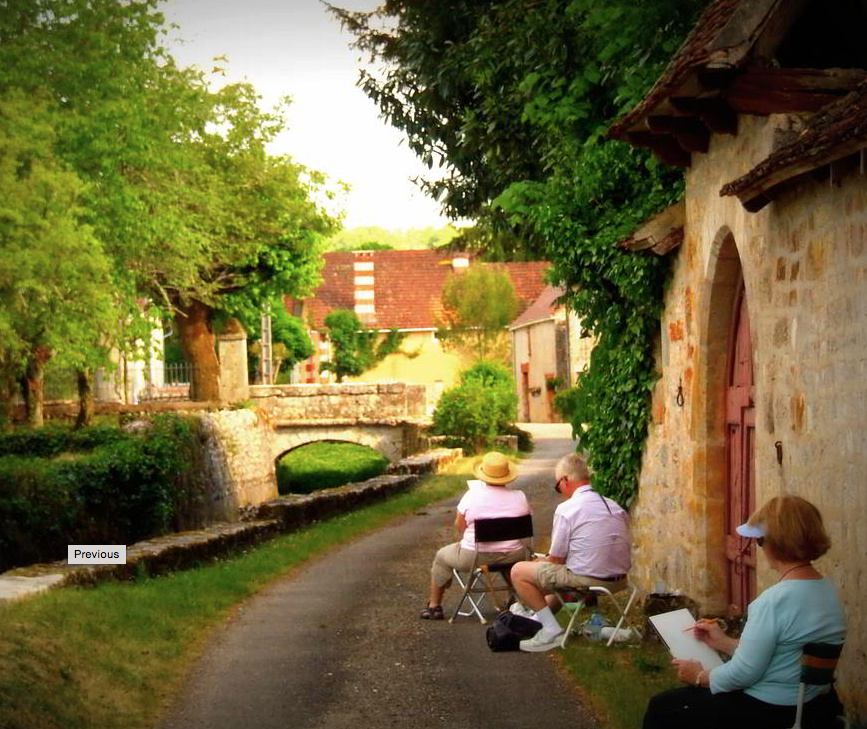
Details are still being ironed out, but tentative dates are October 17-25, 2018. This is truly one of those chance-in-a-lifetime opportunities as the Le Vieux Couvent property is for sale and this will be the last workshop opportunity of the season and possibly, forever.
As the current owners do not know who the buyers will be there is a good possibility that there will no longer be workshops hosted at this location.
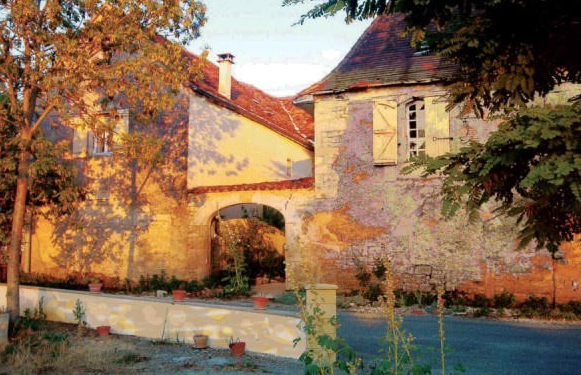
If this sounds like a workshop you do not want to miss, please respond to this email [laure.ferlita @ imaginarytrips.com] by March 31st to let me know! You are under no obligation by responding, but I am asking for serious inquiries only please.
It's kinda late in the season and many folks have their travel plans set for the year. We'll need a minimum of eight artists to make this happen. I am super excited about this opportunity and I want to make sure we can pull this off as this is simply too wonderful to pass up!
If you have any questions, please don't hesitate to reach out to me and I'll do my best to answer.
I hope to see you in France in October!
Laure
As the current owners do not know who the buyers will be there is a good possibility that there will no longer be workshops hosted at this location.
If this sounds like a workshop you do not want to miss, please respond to this email [laure.ferlita @ imaginarytrips.com] by March 31st to let me know! You are under no obligation by responding, but I am asking for serious inquiries only please.
It's kinda late in the season and many folks have their travel plans set for the year. We'll need a minimum of eight artists to make this happen. I am super excited about this opportunity and I want to make sure we can pull this off as this is simply too wonderful to pass up!
If you have any questions, please don't hesitate to reach out to me and I'll do my best to answer.
I hope to see you in France in October!
Laure
 |
| A sampling of the sketchbooks I've made or used |
Choosing a travel sketchbook should be based on our personal likes and dislikes as well as a few more considerations. You have the usual choices of journal size, cover type, binding, page orientation, paper finish, and number of pages. It is also helpful to consider the overall weight and size of the journal with regard to hauling said journal around with you, your work style (sitting down vs. standing up) and which medium you will be using the most on the trip.
By answering a few questions first, it's becomes a little easier to suss out what will work best.
Your Working Style
Let's answer some questions to get a better idea of what you like and how you like to work:
Do you like to write a lot in your travel journal? If you've art journaled/travel journaled before, you may have an idea of how much you like to write and draw. If not, do your write in a journal as a regular practice or when you go on vacations? If you do, this will effect the number of pages you'll want in your journal, the size of the journal and the type of paper you want. A smoother paper might be best if you mostly write and only draw a little.
How will you be traveling—by foot, in a car, etc.? Size is ever so important to consider when you're going to be on foot or hiking a lot. The journal needs to be of a size and weight that's easy to carry as well as to work in. If you're going to one location and venturing out from that place each day, this may not matter so much. But if you're hiking for the entire trip and you won't have a chance to set the book aside, consider the weight of the journal!
Here's What I Know
Do you simply want to sketch with little writing? If this is the case, there are any number of sketchbooks on the market. Choosing a paper finish based on your preferred medium (ink, marker, pencil, watercolor, etc.), page count and size will be your deciding points.
Are you a traditionalist or a rebel? There is no right answer to this one and the question is not meant to be a challenge! If you tend towards more traditional work, then a vertical format in a 5.5 x 8.5 inch format is about as traditional as you can go. If you're more of a rebel (or you get bored easily), you may want to try a square format or a long, skinny format.
Let me state very clearly: the time to find out you are NOT a rebel is BEFORE the trip! There are few things more frustrating than finding out you despise the format of your sketchbook when you're a long way from an art store and you've already started in the sketchbook you've learned to hate. See more below on testing out choices.
Do you like to work in more than one medium? This can effect the type of paper you want in your journal. Watercolor paper is very versatile in that it will accept a number of different mediums well. However, if having paper you can write on or use a pen on is most important, cold press watercolor paper may have more texture than you prefer. (I tend to choose my paper based on the medium I will use most when traveling. Since almost all of my work is ink and wash, I know I want a watercolor paper that will hold up to washes and still let me get a decent line on the page.)
Do you like to add ephemera (receipts, cards, etc.), photos, and found objects into your journal? These little added bits usually help to tell the tale in ways just art or photos alone could never do. If you add a lot of ephemera, it can really bulk up a journal so that it doesn't close well. If you lean towards this type of journaling, coil binding is an excellent option as you have more room to add in these fun elements and the book will have a better chance of lying flat when you're finished.
Do you like to add ephemera (receipts, cards, etc.), photos, and found objects into your journal? These little added bits usually help to tell the tale in ways just art or photos alone could never do. If you add a lot of ephemera, it can really bulk up a journal so that it doesn't close well. If you lean towards this type of journaling, coil binding is an excellent option as you have more room to add in these fun elements and the book will have a better chance of lying flat when you're finished.
Do you work sitting down or standing up? If you are only comfortable sitting down at a table, this can effect your choices because when you're on a trip, there's not always a table handy. Hardcovers are a good option as they give you some support while you work in your lap or while standing up. If you can work standing up, how important is to have some kind of support? Again, a journal with hard covers may be what you need. If you choose a very small sketchbook (3 x 5 or 4 x 6 inch), a soft cover may be fine.
 |
| A variety of Stillman & Birn Sketchbooks |
Making Choices
Keeping the answers above in mind, let's discuss and answer this next set of questions:
Binding Choices: Hard cover, soft cover, coptic stitched, perfect bound or spiral bound?
Keeping the answers above in mind, let's discuss and answer this next set of questions:
Binding Choices: Hard cover, soft cover, coptic stitched, perfect bound or spiral bound?
Hardcover watercolor journals are great in that they give you a support when you are sketching in your lap or standing up rather than at a table. It is easy to work across two pages to create a full "spread" and they're available in a variety of papers. More often than not, hardcover journals are perfect bound (see below). This means removing pages is nearly impossible and it's likely you'll have pages left over at the end of the trip.
Softcovers are way, way more flexible than a hardbound sketchbook and can easily slip into a back pocket (depending on size). You will find softcovers in both perfect binding and spiral binding, but mostly perfect binding. They can be folded back on themselves with ease. Some of the hardbound books can too but not all. These books tend to be much lighter than hardbound books. The trade-off is not having a lot of support. If you work standing up, this may be a challenge depending on the overall size of the journal. Again, size, orientation, and paper finishes run the gamut.
Perfect binding is the type of binding used with magazines and most hardcover books. Because the pages are bound in with glue and/or stitching and we're less tempted to remove "mistakes." The flip side of that is that unless you are a very prolific sketcher and or writer, you probably won't fill all of the pages in one trip. Also, if you add a lot of ephemera, you may have a very cumbersome journal on your hands that does not close well.
Coptic stitched journals come in a variety of paper finishes and sizes as well as page count. Most have hard covers and can be used as a support. These are usually available via book artists rather than through a commercial source, though you will occasionally find them. Again, there is a set number of pages that are not easily removed and while there is typically more play in this type of journal for adding bits of ephemera, it's not infinite.
Spiral bound journals easily fold over on themselves and usually have hard covers so there's support. They work well with added ephemera and pages can be more easily removed or added. With that said, their downside is working across the middle "gutter" of the page to do a full spread. It can be done, but it's not as cohesive as working in a bound book where there is not a gap between the pages.
Paper choices vary greatly and much of our choice will come down to our preferred style of journaling.
Paper choices vary greatly and much of our choice will come down to our preferred style of journaling.
If you are a primarily a writer, then having a paper that is easy to write on will be key.
If you are primarily a sketcher (pen or pencil but without much color), it will be important to have a paper with a lot of tooth for pencil but smooth enough to allow for decent line quality if you want to add ink.
If you are a primarily a watercolor sketcher, then it is imperative that the sketchbook you choose can handle washes and paint regardless of paper finish (smooth, rough, etc.).
Another choice for a travel journal is to make your own. I often wind up making my own journal as I like to play around with page sizes and paper types. Depending on the paper I currently favor, I may or may not be able to find a sketchbook in the orientation or size I want. I talk about building my own for the Paris trip here and here.
Making your own sketchbook is a lot of fun, but takes a bigger investment in time. If you're new to sketching, I would recommend waiting on making your own until you've tested out some of the choices commercially available so that you know what you like as well as what you don't like!
Choosing The Sketchbook That's Right For YOU
Take a look at how you work, at what size you work best at, the type of work you do MOST often (writing vs. drawing vs. painting), the medium you use MOST (ink vs. pencil vs. watercolor vs. marker) and base your choice on these things.
Arches, Blick, Canson, Fabriano, Hand•Book, Moleskine, Pentalic, Strathmore, Stillman & Birn, and many more all have sketchbooks on the market and most of good, if not excellent, quality. It all comes down to choosing what will work best for you.
If forced to make a recommendation, I would ask you the questions above and attempt to suss out your level of experience and your preferred medium. Based on those answers, I'd probably recommend a Stillman & Birn, Strathmore or Arches sketchbook for you. It would be no larger than 5.5 x 8.5 or 7 x 7 inches and it would most likely be in a vertical format rather than landscape or horizontal.
If I don't have the time to make a sketchbook, Stillman & Birn Zeta series is my second best go-to sketchbook as it accepts watercolor and pen and ink equally well. I've even made my own sketchbook out of the Zeta paper (it's available in full sheets) because I like it so much. The Zeta paper is not for everyone—test it first. You may find you like the Beta Series better!
 |
| Variety of styles and covers |
Here's What I Know
These last few notes are about what I've learned on the trips I've sketched and journaled on:
- I have yet to fill a sketchbook while traveling. It's like going to a wonderful restaurant and ordering everything on the menu only to realize you cannot possibly eat it all. I always have pages left over. If I go to the same location more than once, I just make a new title page to indicate the next trip. If the sketchbook is spiral bound, I'll occasionally remove the pages if I can use them in a different sketchbook.
- Do not, I repeat, DO NOT take a new-to-you sketchbook on a trip that you've never sketch or written in before. I've seen it happen and it seriously dampens our enthusiasm when we're fighting the paper because it won't accept watercolor or the ink bleeds or it's too rough to write on. ALWAYS test before you go.
- In fact, if you want to use a new-to-you sketchbook, buy two. Start working in one today, while you're still at home, to make sure you're going to like it and to learn its limitations. If you like it enough, you can use the second one for the trip.
- Size matters! If you generally work small, don't take a 7 x 10 inch sketchbook on a trip—you'll never get it filled. Conversely, if you regularly work on 7 x 10 inch pages, don't frustrate yourself by switching to a 3 x 5 inch sketchbook. You'll have to decide if you can be comfortable working in a smaller sized journal like a 7 x 7 inch or 5 x 8 inch, but don't hobble yourself by going too small unless you're looking for that specific challenge.
- Weight matters! Just know that the bigger the book, the more it weighs. (Seems obvious, right? You'd be surprised.) If it has a leather cover or is hardbound, it weighs more. At the start of the trip, the journal will weigh a few ounces. By the end of the trip, I can guarantee you it will weigh close to 17 pounds! Trust me on this. It may even weigh twice that if you've been hiking the whole time!
- There is NO perfect sketchbook...or at least, I have yet to find the perfect sketchbook and it's not for lack of trying! For me, two things are key...making sure the paper accepts my chosen medium (watercolor), and ease of use. I've never take a journal larger than 7 x 7 inches or 5.5 x 8.5 inches as I don't work large enough to make it worth the extra hassle of carrying a larger journal. I want something I can easily wrestle with while I'm holding onto my palette, paper towels and brush as it seems I'm seldom at a table when I create.
- Last, but certainly not least, the time to experiment is at home, not on a trip. New papers, new paints, new pens, new inks, new ANYTHING should all be tested out multiple times long before you leave home. Your tried-and-true favorites should be tested (multiple) times in any new sketchbook you're considering taking for the trip. There's nothing wrong with experimentation and I highly recommend it, but with EVERYTHING that goes on when we're traveling, the last thing any of us want is to have to fight our journal to create.
Do you have an old favorite you go to time and again or are you more on the adventurous side and like to try something new?
 |
| Exploring Ideas |
The system I used when I went to Acadia National Park was one of the most successful systems I've used for travel. (You can read about it here.) It involves creating a leather cover and signatures of the pages separately. The signatures are held in the leather cover via elastic bands like a Midori Traveler's Notebook. Once the trip and pages are complete, everything is bound into a permanent book with a nice cover if I choose or I can leave them in the leather cover.
 |
| Second Arrangement |
In the images above, I have stamped out a variety of stamps on paper and then cut them out so I can arrange them in a bazillion ways on top of the paper that represents the overall size of my sketchbook. Until I find the combination and layout I want, I'll continue to push the pieces around.
Once I discover the winning combination for the leather cover, I will use permanent ink to stamp them onto the leather and I'll share that part of the process with you in case you're interested in building your own system.
Since the trip is still ten months out, I have plenty of time to explore these ideas and make the sketchbook. If I was boarding a plane next week, I'd be going in a completely different direction with either a book I've already made or altering the cover of a purchased sketchbook.
Do you prefer to make your own sketchbook or do you use one you've purchased?

Goodness, it has been a long time coming, but the day has finally arrived...for an Art Workshop in Paris, France! Many of you know the genesis for the ImaginaryTrips.com classes began in early 2009 when someone mentioned hosting me in the City of Light in conjunction with teaching. Nine years later, the dream will become a reality! I cannot tell you how super excited I am for this amazing opportunity to travel with you so we can explore and sketch and laugh and paint and share this experience of all that is French together!

Guided walks through several of the arrondissements will introduce us to the city, a visit to Musée d'Orsay will inspire our pages, and strolling through the Jardin des Tuileries will provide us with the chance to add some Autumn color to our pages. We can warm up with a cup of hot chocolate at Angelina's afterwords if it's chilly or even if it's not—yum!
We'll visit the second floor of the Eiffel Tower, tour the Paris Opera House, stroll along the Avenue des Champs-Élysées (we'll have to wear our red berets!), and then we'll cruise the river Seine for a different perspective on the city. There's even an optional side trip planned for a visit to Monet's home in Giverny! Can you feel the magic?! These are just a few of the fabulous adventures we'll share!

Throughout each day, I'll be providing impromptu, on-the-spot demos based on our location and your questions as well as one-on-one assistance, encouragement and feedback. I'll be with you every step of the trip! A workbook of art tips and techniques will be provided for you to reference during the trip and long after our time in Paris is over. Time will be built into our days to allow us to share our kits, work on our pages and get to know each other. Flexibility has also been built into our itinerary in case you want to do a little exploring on your own!
Since it's gonna be soooooooo hard to wait for October 2018 to roll around, I'll be sharing my "anticipation pages" as well as ideas, tips, equipment suggestions and much, much more long before the trip gets here! I hope this sounds like a dream come true for you as much as it does for me and you'll join me on this spectacular journey!
All of the information on the trip can be found here!

We'll be traveling with the Blue Walk Tour Company and they will be with us every step of the way. They've been doing "Art Walks" for a number of years and they understand the value of going slow to really see! I've been assured they won't think us too bizarre when we whip our sketchbooks at odd moments.
If you have questions, please don't hesitate to reach out to me or to the wonderful folks at the Blue Walk!
And remember, Paris Is Always A Good Idea!
P.S. And, yes, my bags are packed! But I'm sure they'll be repacked several times over before October gets here. ~ L
|
A Brand NEW Online Class Starting October 12th!
| |
| |
An Imaginary Visit To The American Southwest!
There is no doubt that the American Southwest has some of the most beautiful vistas in the world! Dramatic skies, incredible rock shapes (called hoodoos), gravity-defying arches, views-for-miles and lush, incredible colors! We'll be visiting the following in our four assignments:
We'll spend time on how to use complementary colors, granulating pigments, capturing suggested textures and skipping lots of detail so we can create those grand vistas in our sketchbooks quickly!
The class will start on October 12th and will have four assignments, one for each park. I hope you can join me for this visit! There are three different class formats, one that is sure to work with your schedule and learning style. Click the link below for all the details. I hope to "see" you in October!
|

| Regardless of where, I hope to travel with you soon! |
If your follow me over on Instagram, you will probably want to skip this post as it is a wrap-up of the competition I entered over at @raileurope. Rail Europe is sponsoring a contest for two creative people to take a trip via rail over Germany and Switzerland. Their #talesonrail2017 closes today and the winners are to be announced in the next two weeks.
To begin the re-cap, my first entry was about a family trip to Alaska that began me on the journey of keeping a travel journal as I learned (the hard way) that photos just can't tell the whole tale!
 |
| To read the Instagram post, click here |
From there, I meandered down the back streets of Ybor City, Florida, taking photos of rusty relics:
 |
| To read the Instagram post, click here |
Those ornery, cantankerous sea lions at Pier 39 from San Francisco, were up next:
 |
| To read the Instagram post, click here |
Visiting Bass Harbor Light in Maine was another fond memory I shared:
 |
| To read the Instagram post, click here |
Spending time at John's Pass, Madeira Beach, FL, during the art workshop, Winter Interrupted, was another great page that made it into the contest:
 |
| To read the Instagram post, click here |
From Clearwater, Florida, I "traveled" to the Crescent City and posted one of my favorite sketches from NOLA:
 |
| To read the Instagram post, click here |
And I finally concluded with a sunset hovering over the Gulf of Mexico:
 |
| To read the Instagram post, click here |
As I looked through my travel journals, I was once again amazed at how much I remembered. Not just where I was, but the time of day, what I could see, hear, smell and taste, who I was with and how I was feeling at that moment in time.
When I look at my photos, I don't have that same experience. A portal doesn't open and transport me back to that specific moment in time. For that reason if no other, I suspect I was always keep some kind of journal when I travel, whether it's to the next town over or half-way around the world.
I am just at the beginning of putting a book together. The Art of Travel Journaling will be a labor of love and passion based on just how much I love travel journals and all the ways to fill them to overflowing with the memories of our days.
Whether or not I am awarded a trip, I feel like I've already won as I had an amazing time going back through the sketches and photos, reliving my memories. Without the contest, I may have stumbled over one or two of them, but I wouldn't have paused to put the thought into them as I did for the competition.
And since this is a wrap, let me say thanks to @raileurope for the competition and the opportunity to play. Finally, I'm going to rewrite Rick Blaine's words from Casablanca...
"If you don't [keep that travel journal], you'll regret it. Maybe not today, maybe not tomorrow, but soon and for the rest of your life."


